The most basic concepts in math involve numbers and operations like addition, subtraction, multiplication, and division. These form the foundation of many other areas of math.
Maths
Mathematics is a field of study that discovers and organizes methods, theories and theorems that are developed and proved for the needs of empirical sciences and mathematics itself. There are many areas of mathematics, which include number theory, algebra, geometry, analysis, and set theory.
Numbers and Arithmetic
Say hello to key mathematicians throughout time
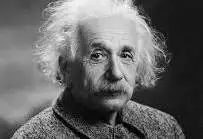
German-born theoretical physicist who is best known for developing the theory of relativity. Einstein also made important contributions to quantum mechanics. His mass–energy equivalence formula E = mc², which arises from special relativity, has been called "the world's most famous equation".
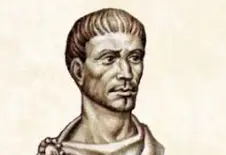
Diophantus of Alexandria was a Greek mathematician, who was the author of two main works: On Polygonal Numbers, which survives incomplete, and the Arithmetica in thirteen books, most of it extant, made up of arithmetical problems that are solved through algebraic equations.
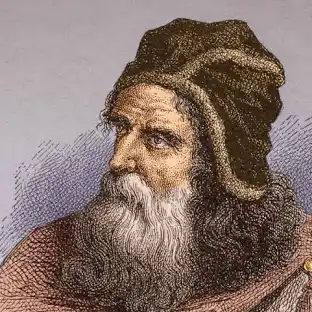
Archimedes of Syracuse was an Ancient Greek mathematician, physicist, engineer, astronomer, and inventor from the ancient city of Syracuse in Sicily. Although few details of his life are known, he is considered one of the leading scientists in classical antiquity.
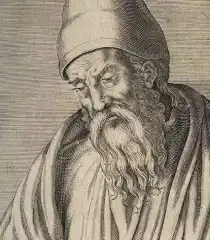
Euclid was an ancient Greek mathematician active as a geometer and logician. Considered the "father of geometry", he is chiefly known for the Elements treatise, which established the foundations of geometry that largely dominated the field until the early 19th century.
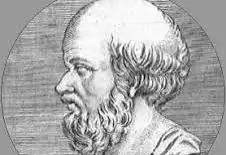
Eratosthenes of Cyrene was an Ancient Greek polymath: a mathematician, geographer, poet, astronomer, and music theorist. He was a man of learning, becoming the chief librarian at the Library of Alexandria.
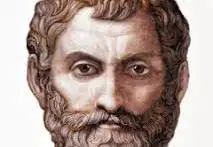
Thales of Miletus was an Ancient Greek pre-Socratic philosopher from Miletus in Ionia, Asia Minor. Thales was one of the Seven Sages, founding figures of Ancient Greece.
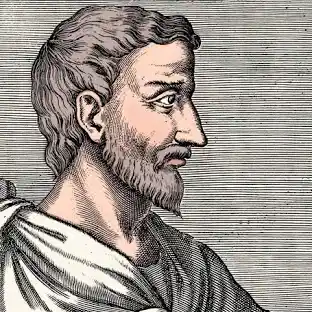
Pythagoras of Samos was an ancient Ionian Greek philosopher, polymath, and the eponymous founder of Pythagoreanism. His political and religious teachings were well known in Magna Graecia and influenced the philosophies of Plato, Aristotle, and, through them, Western philosophy.
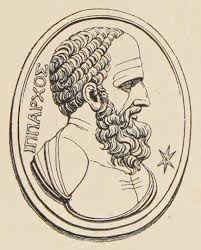
Hipparchus was a Greek astronomer, geographer, and mathematician. He is considered the founder of trigonometry, but is most famous for his incidental discovery of the precession of the equinoxes. Hipparchus was born in Nicaea, Bithynia, and probably died on the island of Rhodes, Greece.
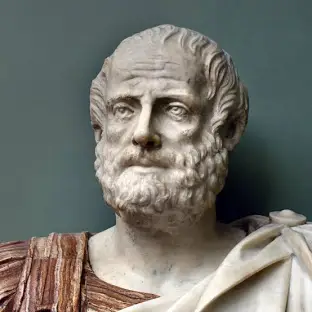
Aristotle was an Ancient Greek philosopher and polymath. His writings cover a broad range of subjects spanning the natural sciences, philosophy, linguistics, economics, politics, psychology, and the arts.